
During a criminal investigation, the transfer of evidence from collection to storage is one of the most vulnerable stages in the chain of custody.
Traditional evidence lockers often require hallway transport and multiple handoffs before items reach the property room—which means more movement and more room for error.
A pass-through evidence locker is designed to eliminate those extra steps. Installed between secure rooms, it allows direct deposit into the evidence room, reducing handling and protecting chain-of-custody integrity from the start.
Benefits of Pass-Through Evidence Lockers
The benefits of pass-through evidence lockers center on one thing: reducing risk during intake. By allowing officers to deposit items directly into the property room, these systems eliminate hallway transfers and extra handoffs. Compared to traditional evidence lockers, they strengthen chain-of-custody protection, support secure after-hours submission, and streamline the entire intake process.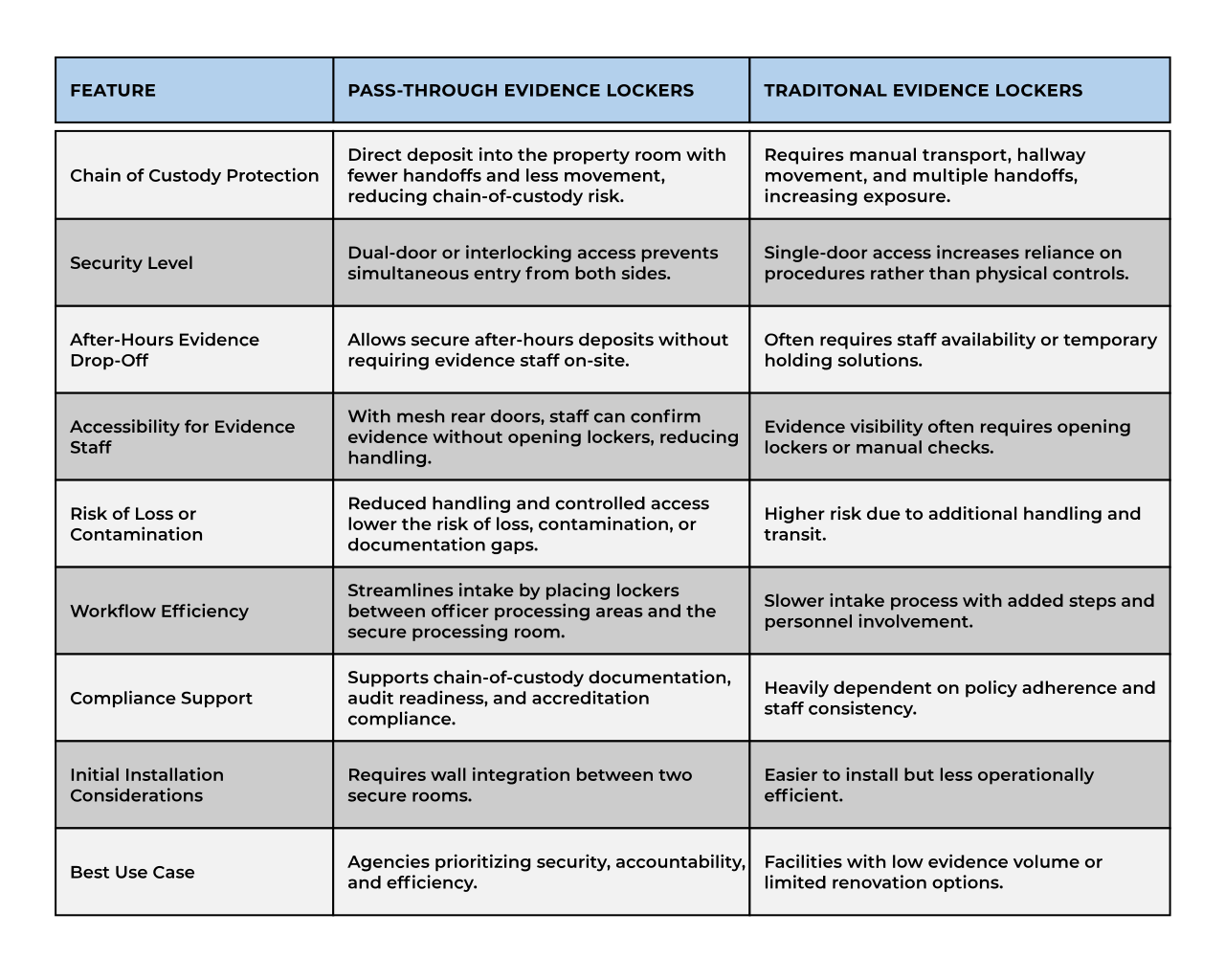
On paper, the differences are clear. In practice, they’re even more significant. Let’s take a closer look at how pass-through lockers strengthen evidence intake.
Evidence Lockers Protecting the Chain of Custody
Chain of custody refers to the documented handling and transfer of evidence from collection through storage and final disposition. Every additional handoff or movement creates another opportunity for error, contamination, or documentation gaps.
Pass-through evidence lockers reduce those risk points by eliminating hallway transport and unnecessary transfers. Installed between an officer intake area and the property room, they allow officers to deposit evidence directly into a secure, access-controlled system. Fewer touchpoints mean strong documentation integrity and less exposure to chain-of-custody challenges.
Store Evidence in an Accessible—but Controlled—Location
Secure evidence storage must balance two priorities: controlled access and operational efficiency. Pass-through evidence lockers achieve both. Installed between secure rooms, they allow officers to deposit evidence while restricting property room access to authorized personnel only.
Features such as interlocking dual doors prevent simultaneous access from both sides, strengthening physical access control. On the property room side, mesh doors or viewing panels allow evidence technicians to visually confirm items without opening compartments, reducing unnecessary handling and exposure.
Compared to traditional evidence lockers—which often rely heavily on policy compliance rather than physical separation—pass-through systems create a clearly defined intake boundary that limits access, movement, and risk.
For example, when the Whitehall Division of Police in Ohio needed to redesign an evidence room measuring just 371 square feet, Patterson Pope created a dedicated evidence processing area with built-in pass-through lockers installed directly into the separating wall.
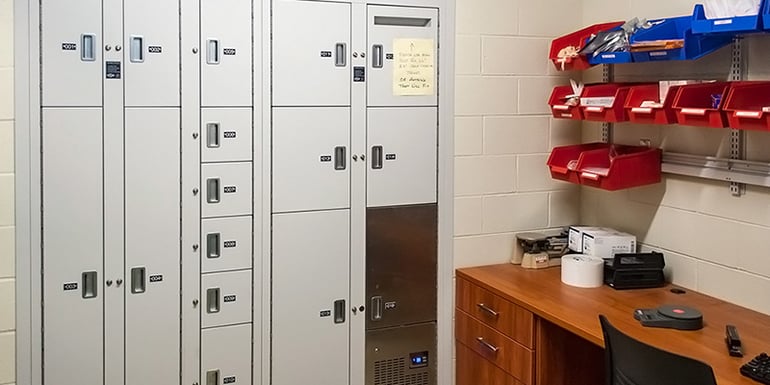
The system provided an extra-secure chain of custody while clearly defining intake and storage zones within a limited footprint. By separating processing from long-term storage, the department improved organization, visibility, and workflow, without expanding the building.
Accommodate Evidence of All Sizes and Types
When comparing evidence locker types, flexibility matters. Evidence intake rarely fits neatly into standard compartment sizes. Items may range from small biological samples and narcotics to long firearms, bulky equipment, or sealed clothing bags.
Pass-through evidence lockers can be customized by size, depth, and configuration to accommodate a broader range of evidence types. This flexibility supports secure storage without overgrowing, stacking, or temporary holding solutions that can complicate tracking and chain-of-custody documentation.

Enable Secure After-Hours Evidence Submission
Evidence intake doesn’t stop at the end of a shift. Pass-through evidence storage lockers allow officers to securely deposit items after hours without calling in an evidence technician.
This is especially valuable during late-night investigations, ensuring evidence is secured immediately rather than temporarily stored or delayed. Evidence remains locked, documented, and ready for processing when technicians arrive.
Disadvantages of Non-Pass-Through Evidence Lockers
Traditional evidence lockers rely more heavily on process than physical separation.
In many facilities, officers must manually transport items through hallways, transfer evidence to another individual, or temporarily stage materials before final storage. Each additional movement or handoff introduces another opportunity for documentation gaps, contamination, or chain-of-custody challenges.
After-hours intake can also be limited. Without a controlled pass-through system, agencies may require staff availability, temporary holding areas, or delayed logging. Traditional lockers may lack visibility from the property room side, requiring compartments to be opened for verification and increasing unnecessary handling.
For agencies managing higher evidence volumes or sensitive materials, these workflow limitations can compound over time.
Secure Evidence Storage Solutions: Choosing the Right System
Choosing between pass-through and traditional evidence lockers depends on your facility layout, evidence volume, and operational workflow. For agencies looking to reduce handling risk, strengthen chain-of-custody protection, and improve intake efficiency, pass-through systems often provide meaningful advantages.
Every evidence room operates differently. If you’re evaluating secure evidence storage solutions—whether you’re upgrading an existing space or designing a new one—our team can help you assess your workflow, compliance needs, and physical layout to determine the right approach. Reach out to start the conversation