
Evidence isn’t judged by how tidy it looks on a shelf. It’s judged by whether it reaches the courtroom in the same condition it was collected. And that’s a tall order for agencies juggling more evidence types, stricter environmental needs, and higher expectations around the chain of custody.
Effective evidence preservation and management means more than just finding a place to put things. It’s about keeping every item secure, stable, and untouched, whether it’s sitting for 72 hours or 20 years. That means preventing contamination, avoiding degradation, and building systems that leave no room for mishandling.
Below, we break down the key challenges agencies face today and how modern storage design helps strengthen preservation, compliance, and day-to-day security.

Challenge 1: The Volume & Variety of Evidence
Firearms, drugs, electronics, cash, clothing, and biological samples each come with their own storage needs and security levels. And while digital evidence can live on a server for years, physical evidence often demands more hands-on care to prevent degradation, contamination, or accidental damage.
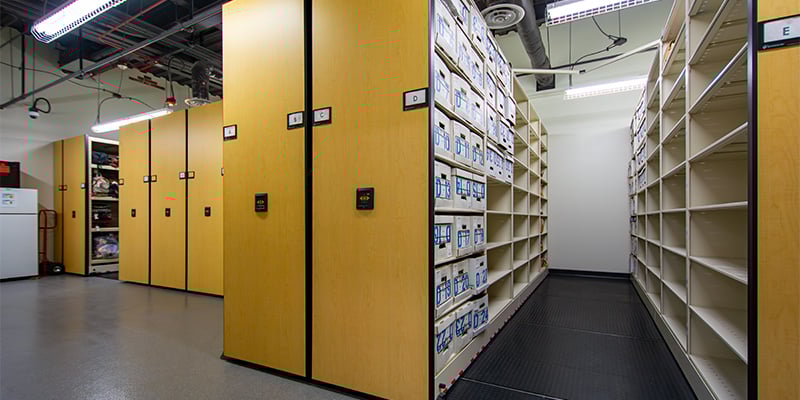
Pair that with long-term retention requirements, growing caseloads, and — too often — limited staffing, and evidence rooms can quickly become overcrowded, creating real evidence preservation risks. And while congestion is inconvenient, it also increases the chances of item-to-item contamination, poor labeling, or misplaced or lost evidence.
Real-World Example: Mount Pleasant Police Department
The Mount Pleasant Police Department was bringing in roughly 1,800 new pieces of evidence a year. With a predicted population boom on the horizon, they were expecting even more. Their existing evidence storage footprint was fewer than 300 square feet. The department was making do, but something had to change.
By transitioning to high-density mobile shelving and adding adjustable pass-thru evidence lockers, the department maximized efficiency in a redesigned 700-square-foot space. Secure shelving supported their main evidence area, while dedicated secure rooms handled narcotics and firearms, and an off-site facility housed oversized items.
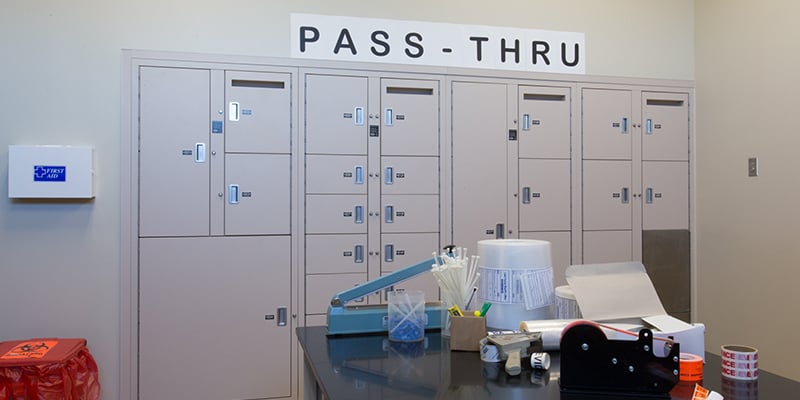
Together, these improvements created cleaner organization, reduced congestion, and strengthened long-term evidence preservation by giving every item a stable, protected environment.
The results spoke for themselves: Mount Pleasant earned International Association for Property and Evidence (IAPE) accreditation and gained the confidence that their storage system could scale with their caseload.
Challenge 2: Environmental Controls are Key
As forensic science evolves, so does our understanding of how evidence should be handled and stored. Today, law enforcement professionals follow strict environmental control standards to keep biological specimens (e.g., DNA, bodily fluids, tissues, etc.) admissible and intact — a foundational part of evidence preservation.
Temperature, humidity, and light exposure are just the start. Biological and other sensitive evidence must be protected immediately at intake, kept separate from general storage, and secured throughout both short- and long-term housing. If conditions slip, degradation can happen quickly, and even a small amount of damage can jeopardize a case.
To prevent this, agencies rely on purpose-built solutions such as:
- Refrigerated Evidence Lockers to stabilize biological evidence the moment it comes through the door
- Pass-Thru Evidence Lockers to maintain the chain of custody while moving items into secure areas
- Static Shelving to organize long-term cold-storage rooms
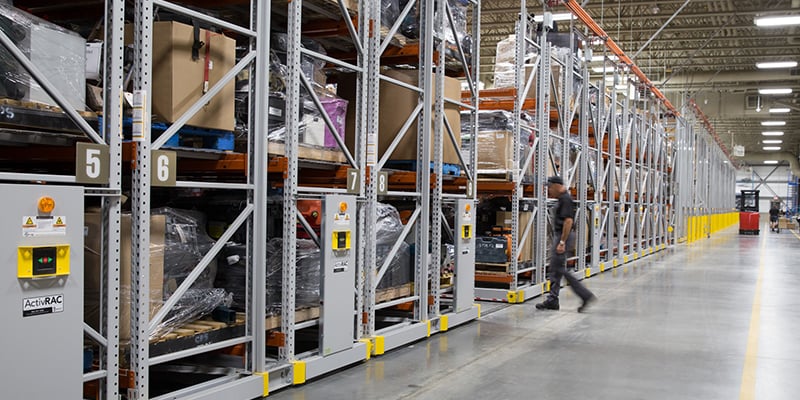
- ActivRAC® Heavy-Duty Mobile Shelving to save space for oversized items inside controlled environments
The right storage solution can make the difference between admissible evidence and a case thrown out of court.
Real-World Example: Rockdale County Sheriff's Office
The Rockdale County Sheriff’s Office faced a common challenge: rising volumes of biological evidence with nowhere appropriate to put it. Storage areas were cramped and overcrowded, and biological samples were being kept in standard dorm refrigerators, a temporary fix that everyone knew needed an upgrade.
Working with Patterson Pope, the Sheriff’s Office completely rethought its evidence spaces. Pass-thru evidence lockers (complete with refrigerated compartments) were added so officers could deposit sensitive evidence without entering the main room, reducing handling and contamination risks.

Behind the lockers, technicians had dedicated processing space, while long-term areas received new powered high-density shelving, widespan shelving for longer items, and secure weapons storage features.
The overhaul more than doubled storage capacity, giving the agency room for over 2,100 boxes and ensuring proper preservation for biological and high-risk items. Captain Duane Day called the transformation “a noticeable difference…so much easier to manage.”
Challenge 3: Toughter Scrutiny for Evidence Handling
A federal survey of evidence handlers found that nearly one in five agencies had no formal evidence management policies in place — a worrying gap when even a single break in the chain of custody can make evidence inadmissible.
Proper evidence preservation means ensuring the agency can demonstrate exactly who handled the item, when it moved, and whether it stayed secure the entire time, as well as keeping the item physically intact. As standards rise, agencies are expected to maintain item-level tracking, clear transfer procedures, and consistent auditing practices.

To reduce risks, modern vidence rooms rely on physical systems that limit unnecessary handling and create a clean, documented workflow, including:
- Evidence lockers that prevent unauthorized access and eliminate hand-to-hand transfers
- Smart locker systems that support controlled access, secure check-in/check-out, and automated audit trails
Real-World Example: Knox County Criminal Court
Before updating its evidence room, Knox County Criminal Court in Tennessee depended on a single staff member who knew where everything lived. The room itself was packed. Clothing, bicycles, doors, and even bedframes, all shared space in a system that made tracking and retrieval difficult.

“We knew we needed to do something,” said Mike Hammond, Criminal Court Clerk for Knox County. The team installed a high-density shelving system as the backbone of a new workflow, creating order where there had been congestion. “We took the time to get it right, and it’s made a big difference. We took this step to not only make things better today, but to make us effective for 10, 15, even 30 years down the road.”
Challenge 4: Short-Term and Long-Term Evidence Need Different Solutions
Evidence preservation starts the moment an item is collected. And in many agencies, the biggest risks don’t show up in long-term storage. They happen between stages. Moving evidence from intake to temporary holding, or from temporary holding to long-term housing, is where errors, bottlenecks, and chain-of-custody issues most commonly occur.
Best practices call for separate, purpose-built zones for immediate intake, short-term temporary storage, and long-term evidence housing. Each zone needs its own tools and controls, and each transition should happen cleanly, with minimal handling and clear documentation.
Purpose-built storage makes this possible:
- Non-pass-thru lockers hold evidence securely during the first few critical hours
- Pass-thru lockers eliminate hand-to-hand transfers as items move into the evidence room
- High-density shelving keeps long-term inventory organized and protected
- Smart lockers support secure, auditable check-in/check-out when items need to be moved again
Real-World Example: Locust Grove Police Department
Locust Grove PD was managing evidence across three separate buildings: intake in one, processing in another, and long-term storage in a third. That fragmentation made accountability difficult and created unnecessary chain-of-custody exposure.
“Our evidence storage situation was creating some chain-of-custody issues for our team, and really, we just knew it was time to modernize,” said Police Chief Jesse Patton.

Working with Patterson Pope, the department consolidated evidence workflows into a single, state-of-the-art space. The redesign included mechanical-assist high-density mobile shelving, both standard and refrigerated lockers for intake, static shelving for long-term housing, and universal weapons racks.
The result was a unified system with clearer transitions, better preservation, and room to grow.
Meet Higher Evidence Preservation Demands
Evidence preservation is a continuous process that starts the moment it’s collected and extends through long-term storage, sometimes for decades. Every handoff and every environment has to protect both the condition of the item and the integrity of the chain of custody.
Agencies today are facing larger evidence inventories, tighter standards for biological materials, increased scrutiny around the chain of custody, and more transition points where things can go wrong. In that landscape, a strong physical infrastructure isn’t optional. It’s foundational to preserving evidence and protecting cases.
Patterson Pope’s solutions are built to support every phase of evidence management, from intake to long-term retention, helping agencies stay organized, compliant, and confident in their preservation practices.
Ready to strengthen your evidence preservation strategy? Connect with a Patterson Pope representative today to get started.