
How Two Open Offices Use Day-Use Lockers
At the University of Tennessee, Knoxville, about 200 Facilities Services staff work in a former marble factory with a wide-open floor plan. “Because everything is so open, we wanted items to be hidden when being stored,” says project coordinator Justin Dothard.
The new storage, day-use lockers included, sits along the edges of the open floor and was painted to blend into the walls. Student interns who switch desks from day to day keep their things in the lockers instead of piled under a borrowed desk.
Meanwhile, software company Peaksware planned its open office with about 150 lockers in one break area. Patterson Pope helped split them into three banks for different groups of users, all tied to building access control, so the fob that opens the front door also opens a locker.
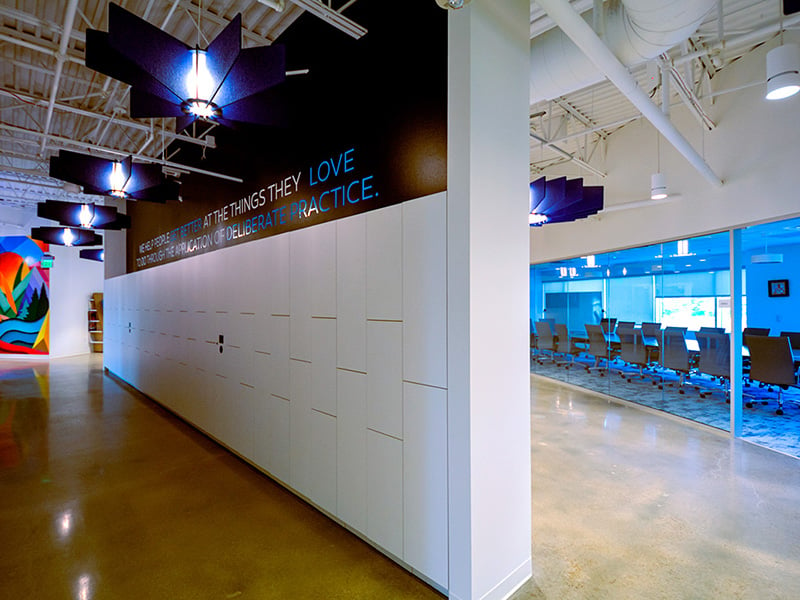
Employees on two- or three-day office schedules claim a locker when they need one, and once a week IT clears out expired lockers and resets them for the next person. “Behind the scenes, it’s seamless for our IT people to manage,” says Nathan Johnson, who helped plan the building.
What Modular Configurations Are Available for Day-Use Lockers?
Day-use lockers are modular. You choose the height, width, depth, and number of tiers, then arrange banks as built-ins, partition walls, or islands to fit the space:
- Heights: 24, 36, 54, 60, and 72 inches standard, with other heights available in 1-inch increments
- Depths: 12, 15, 18, and 24 inches
- Widths: 12, 15, and 18 inches
- Tiers: One to five per column, depending on height
- Layouts: Built into unused wall space, freestanding as a partition wall, or as an island topped with seating or a work surface
Welded frames let a bank move to a new spot or take on more columns as the floor plan changes. In an office where the seating chart changes more often than the carpet, that flexibility pays for itself.
Tier count sets compartment sizes, so start with what people carry. Multi-tier columns fit laptop bags and purses, and full-height single tiers with hooks leave room for coats and bike helmets.
Pro tip: Before picking tiers, spend a morning at the entrance tallying what people walk in carrying.
What Lock and Security Options Work for Day-Use Lockers?
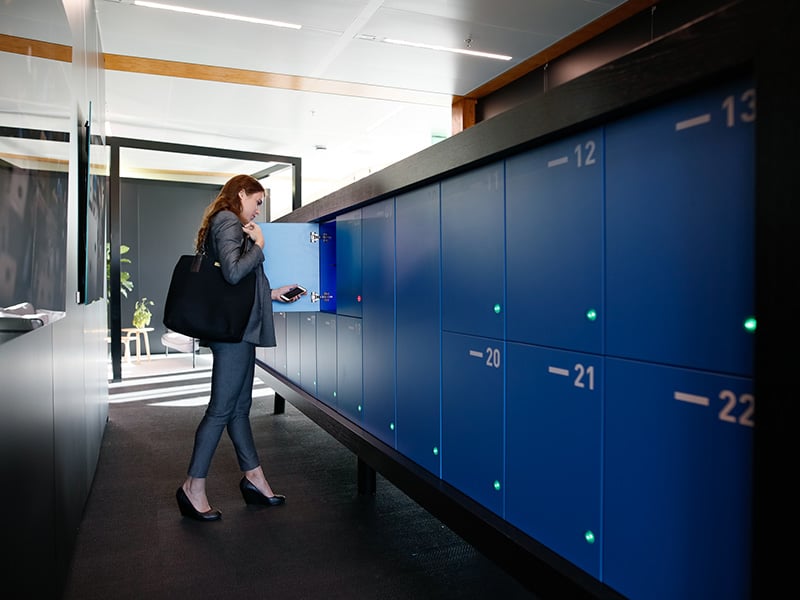
Day-use lockers can use keyed or combination locks, hasps for user padlocks, digital keypads, RFID readers, or smart locks that report usage and assignment data. Staffing and turnover usually decide the fit.
Not every lock works with every door material, so confirm compatibility with your locker specialist before ordering.
- Mechanical: Each keyed locker gets its own key, released with a coin or token or handed out at a front desk. Hasps let users bring their own padlock, and combination locks fit better with longer assignments, since resetting a code after every user gets old fast.
- Digital keypad: A user enters a code to lock the door and re-enters it to open and reset the lock. Keypads work well in buildings without a front desk.
- RFID: Users tap the badge or fob already clipped to their lanyard, so the only thing left to remember is which locker they picked.
- Smart locks: Smart lockers handle assignments and releases through software and log how often each compartment gets used.
Pro tip: Keypad batteries die, and keys go home in pockets. Post a number people can call when a battery runs out or a PIN slips their mind, and keep a master key and a labeled set of spares at the front desk so a lost key never holds up the next user.
What Are the Benefits and Features of Day-Use Lockers?
Day-use lockers are built for constant turnover and can be finished to blend into the room around them. Because nobody owns a locker, a smaller bank can serve a bigger staff.
Quality
Welded steel frames resist swelling and delamination. Concealed hinges are slam-proof, which helps on mornings when someone is running late, and the lockers carry a five-year warranty.
Style
Steel powder-coat colors, high-pressure laminate in any Wilsonart finish, and white oak veneer let lockers match the finishes around them. Removable custom graphics can be updated without replacing the lockers. And storage that matches the walls can read as part of the architecture.
Convenience
With no permanent assignments, a locker that empties at night is ready for someone new in the morning, and part-time staff can share a smaller number of lockers. Two options make shared lockers easier to live with:
- Sloped tops keep the top of the bank from becoming a shelf for the stuff that didn’t fit inside.
- Hooks and number tags give coats a place to hang and help people find their locker again after lunch.
Pro tip: Let your staff use your lockers before you write your policies. Start with basic rules and wait 90 days before setting anything in stone.
Find a Place for Your Stuff
Whether it’s a hybrid office or a hospital lobby, we love helping staff, students, and visitors stash their stuff, even if it’s only for the day. Start sketching your layout in the Locker Design Hub, or speak to a specialist to start planning your day-use lockers.