
In corrections, storage issues can slow booking, create chain-of-custody gaps, add friction during shift changes, and delay release. That’s why jail and prison lockers should be evaluated as part of a broader workflow, not as standalone products.
It’s a distinction that matters—inmate property storage, correctional officer personal storage, and evidence or contraband handling are three different operational challenges. When facilities treat them as the same problem, they often end up with storage that doesn’t fully support any of them.
So instead of just asking which locker to buy, consider:
- What workflows does the storage need to support?
- Where do breakdowns happen today?
- How can the system reduce friction at those points?
For most facilities, the best answer is not one locker type. Different correctional workflows often require different locker applications to support intake, temporary holding, retrieval, and everyday operations.
What Are the Best Secure Lockers for Correctional Facilities?
No single locker solves every corrections storage problem. The best jail and prison lockers depend on the workflow they need to support, the level of accountability required, and the space available.
That’s because inmate property, staff personal storage, and evidence or contraband handling are different operational challenges. They involve different users, different timelines, different access requirements, and different chain-of-custody expectations.
Treating them as the same storage problem usually leads to a system that is harder and less effective over time. The best correctional storage plans start with workflow, not fixtures.
Before choosing a locker or storage system, correctional facilities should start with a few broader questions:
- What is being stored? Personal property, staff gear, evidence, and contraband all have different storage requirements.
- What level of security and control is needed? Some applications require basic secure storage, while others demand tighter access control, separation, or chain-of-custody support.
- How does the storage process need to work? The right solution should support the facility’s day-to-day workflow, including intake, access, retrieval, and accountability.
Different correctional workflows often call for different locker approaches, depending on how items move through the facility and what level of separation, temporary holding, or controlled handoff is needed.
The right solution depends on whether the priority is secure separation, controlled handoff, or fast retrieval. Once that priority is clear, it becomes much easier to determine which locker and storage solutions fit each use case.
Correctional Officer Personal Lockers: Supporting Staff Flow and Readiness
In corrections, staff lockers are part of the facility’s operational support space. They affect shift readiness, daily routine, and how smoothly officers move through the beginning and end of each shift.
Shift changes are high-traffic, time-compressed moments. Officers arriving for duty need to store personal items, access gear, and move into position quickly. Officers ending a shift need to do the reverse. When correctional officers’ personal
Lockers do not support that flow. Delays and friction can build into every shift.
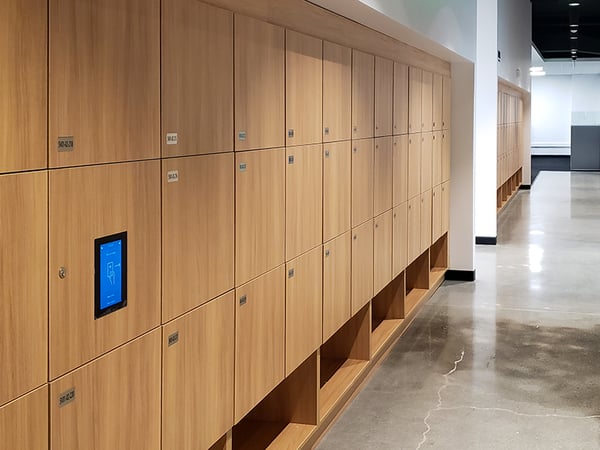
That’s why effective staff prison lockers need to balance security, durability, and usability. They should protect personal belongings, support orderly gear access, and fit the traffic patterns of the room so staff can move through the space efficiently, rather than work around it.
Choosing the right locker for the environment
The right correctional officer’s personal locker depends on how the space is used, how much wear it sees, and what kind of environment the facility wants to create.
- Steel Lockers: A strong fit for high-demand settings where heavy daily use, durability, and long-term wear resistance are top priorities.
- Laminate Lockers: A good option for updated facilities or staff spaces where appearance, finish flexibility, and overall environment are part of the planning conversation, while still supporting day-to-day function.
- Personal Storage Lockers: A practical choice for staff areas that need secure, individual storage for correctional officers' personal items and everyday essentials, while supporting organized day-to-day use.
The right choice depends on the environment, traffic patterns, staff routines, and the demands of the space itself.
Contraband and Evidence Processing: Controlled Handling, Not Just a Locked Door
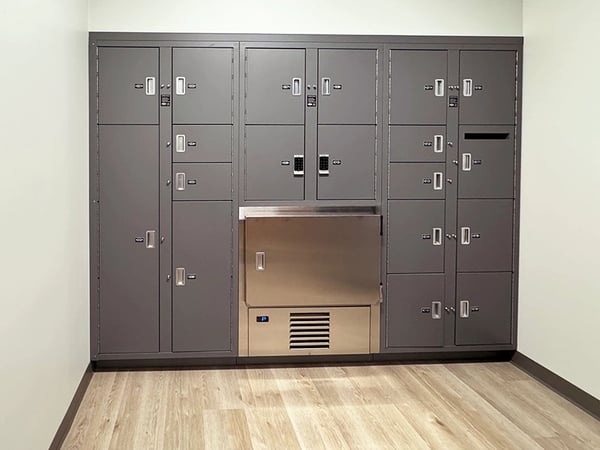
When it comes to evidence and contraband processing, the difference between secure storage and controlled handling matters. The best contraband lockers for detention centers are typically those designed to support secure intake, temporary holding, and more consistent handoff during evidence processing.
Depending on the type of material being handled, that may include different locker applications, such as refrigerated lockers for evidence requiring temperature-controlled storage.
This is where evidence and contraband storage systems often succeed or fail. Breakdowns usually happen at a few predictable points:
Handoff accountability
If it’s unclear who received an item, when it was transferred, or how it entered storage, chain-of-custody gaps begin immediately. Evidence lockers can help support more consistent intake and handoff by creating clear deposit points and better organization, reducing the chance that evidence gets misplaced, mixed, or handled inconsistently.
Long-term organization
Even when intake is handled correctly, evidence can become harder to locate and retrieve over time if the organization breaks down. Long-term retention often requires a different approach than temporary intake, especially as inventory grows.
Temporary intake and long-term retention are different problems
One of the most important planning decisions is recognizing that temporary intake and long-term retention are not the same storage challenge. Getting an item into documented custody is a handoff problem. Keeping that item organized, retrievable, and properly stored over time is a retention problem.
That distinction matters because the right solution often depends on where the risk sits:
- Evidence lockers support more consistent intake, clearer separation, and more structured handoff processes.
- Refrigerated lockers support items with specific handling needs.
- High-density storage and static shelving support longer-term organization as inventory grows
The strongest contraband and evidence storage environments are designed around three realities: Intake, separation, and retention.
Inmate Prison Lockers: Supporting Booking, Movement, and Release
At first glance, inmate property processing can look like a storage problem. In practice, it’s usually a handoff problem. Jail lockers often play an important role during booking, transfer, and release, helping staff receive, separate, secure, and return property more consistently as it moves through intake and temporary holding.
That matters because breakdowns tend to happen during those handoff points. When intake is inconsistent, booking slows down, staff improvise, and property becomes harder to track from the start.
Later, during release or transfer, disorganized intake and retrieval processes can delay return, increase handling errors, and create accountability concerns when items are missing or disputed.
What inmate property lockers do well
For many facilities, the main benefit of inmate property lockers is supporting short-term, compartmentalized storage during key transition points during the intake process. A locker-based approach can help:
- Keep each inmate’s belongings separated
- Improve security through individual compartments
- Help maintain more consistent property tracking as items move through booking, temporary holding, and release
- Reduce mix-ups and misplaced property
- Make retrieval faster and more consistent for staff
Choosing the right jail locker for inmate property processing
Inmate property lockers are a strong option for secure, short-term storage and controlled handoff. But not every process works the same. The right prison locker setup often depends on how property is separated, staged, and moved through the facility:
- Smart Lockers can support more structured short-term exchange workflows, particularly when facilities need more consistency around handoff, retrieval, or temporary property movement.
- Pass-Through Lockers can support more controlled intake and transfer workflows by creating a secure handoff point between staff or process stages, helping reduce unnecessary handling and improving accountability during property exchange.
Conclusion
Prison and Jail lockers support very different parts of correctional operations, and choosing the right locker often comes down to the workflow it needs to support.
Inmate property processing, correctional officer storage, and evidence or contraband handling all involve different users, different timelines, and different accountability needs.
The best locker solutions are the ones that fit how property, gear, and evidence move through the facility—whether that means supporting short-term property exchange, improving shift readiness, or creating more structured handoff and retrieval processes.
If you’re planning a correctional storage project, Patterson Pope can help you evaluate your workflows and identify the right storage approach for your facility.