
Going vertical sounds simple. Use the height you have, store more inventory, and solve the space problem. But chasing density without thinking through access and workflow is just a reliable way to create a more organized version of the same old problems.
A high-bay warehouse works best when available height supports the way inventory moves. High-bay storage can increase capacity, improve organization, and support better flow without adding square footage or changing buildings. But only when the inventory profile, handling equipment, and throughput patterns can support taller, denser storage.
That’s why going vertical is less about installing the tallest possible system and more about planning the right storage strategy. Here’s how to think through whether going vertical makes sense, what to evaluate before committing, and which storage systems solve which problems.

What High-Bay Warehouse Storage Means in Practice
High-bay storage means different things to different people: pallet racking to one operations manager, vertical lift modules to another, a mezzanine to a third. They’re all right.
The right approach depends on what you store, how often you touch it, and what your handling equipment can support. Most warehouse environments use more than one system. The question is which combination fits the operation.
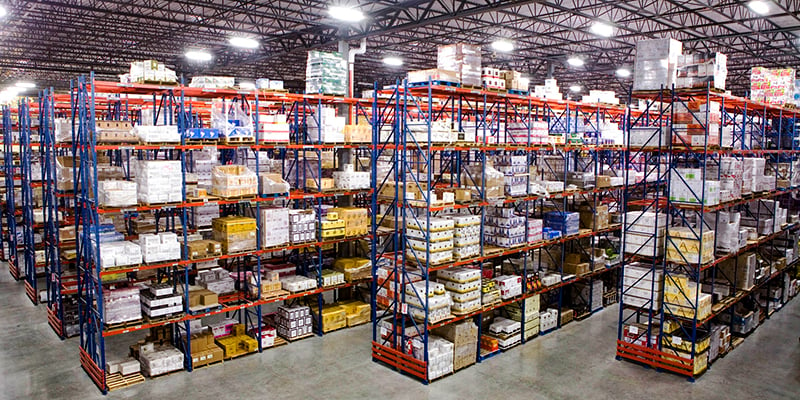
Pallet racking is probably the most recognizable version of going vertical in a warehouse environment. It’s hard to argue with a system that’s been serving warehouse operations for the better part of a century.
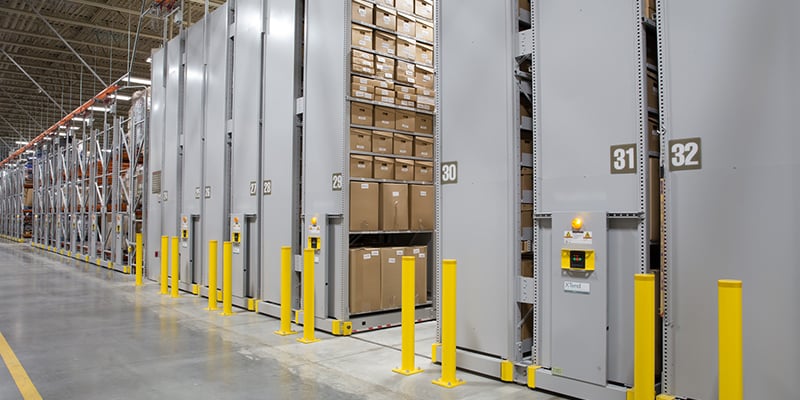
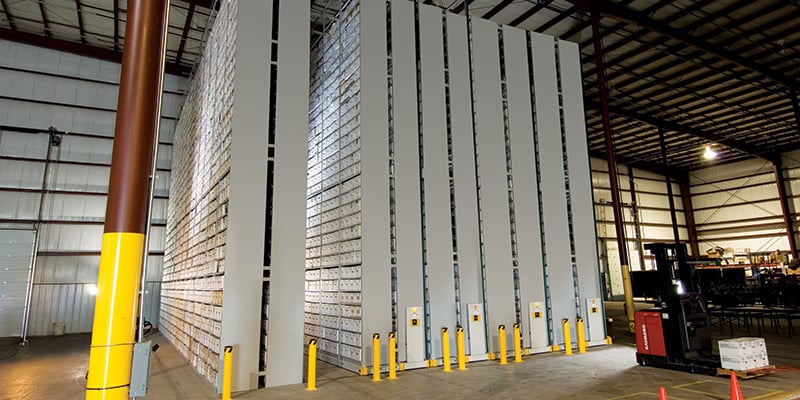
But pallets and forklifts aren’t the only answer. High-bay storage also applies to cartons, parts, and hand-accessed inventory. Static high-bay shelving can increase storage positions while keeping items visible and accessible, while mobile high-bay shelving can add density when inventory is slower-moving or access can be controlled aisle by aisle.
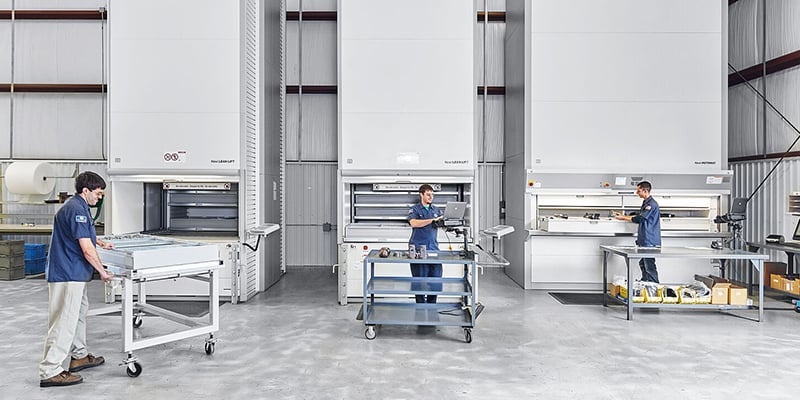
Vertical lift modules and carousels take a different approach by recovering floor space while improving retrieval speed for smaller parts and lower-volume picks.
High-bay storage can also include mezzanines, which add storage height and usable operating area inside the same building footprint.
When High-Bay Storage Makes Sense
A high-bay warehouse strategy makes the most sense when the facility has available height, but the current layout is starting to work against the operation.
That might show up in a few ways:
- Your building isn’t fully utilizing its vertical clearance
- Inventory growth is outpacing available storage positions
- SKU growth is making it harder to organize, separate, or pick efficiently
- Expansion or relocation is more expensive than improving the current footprint
- Labor travel time, congestion, or lift traffic suggests the current layout is wasting space and motion
High-bay storage is especially valuable when a facility needs more capacity and better flow at the same time.
Pallet-heavy facilities may need more reserve storage or cleaner SKU separation. Carton, parts, and mixed-inventory areas may need better density without losing access. Other spaces may need dedicated zones for picking, packing, kitting, or controlled retrieval.
That’s why going vertical should be treated as a diagnostic decision, not a default move upward. The goal is not just to store higher. It’s to solve the space, access, and movement problems that are slowing the operation down.
Planning Questions to Ask Before Going Vertical
The best storage solutions are shaped by constraints, not catalog preferences. Before building a high-bay warehouse layout, pressure test the building, the inventory, and the way work moves through the space.
What can the building actually support?
Start with the physical environment. Clear height matters, but so do the conditions around it.
Ask:
- Is clear height usable throughout the building, or only in certain areas?
- What are the column spacing and slab load ratings?
- How will taller storage interact with lighting, sprinklers, and code requirements?
- What aisle widths are available?
- Would narrower aisles affect lift access, traffic flow, or fire protection?
Height only helps when the building can safely and practically support the storage system around it.
What does the inventory require?
High-bay storage works differently for palletized goods than it does for cartons, parts, or mixed SKUs. So, next, take a look at the inventory itself.
Ask:
- Is the inventory palletized, non-palletized, or a mix of both?
- How consistent are load weights and dimensions?
- How many SKUs are in the system, and how often does that mix change?
- Are there FIFO or LIFO requirements?
- Does the operation store large quantities of the same item, or smaller quantities across many SKUs?
The more varied the inventory, the more carefully the system needs to balance density with access.
How does work move through the space?
Finally, pressure test the workflow. This is where building a high-bay warehouse either improves the operation or creates a taller version of the same bottleneck.
Ask:
- How often is inventory touched?
- Does the operation need fast access, maximum density, or different priorities by zone?
- Do replenishment and picking happen in the same areas?
- How could congestion, lift traffic, or labor movement change?
- Will denser storage improve performance or create new choke points?
Density only helps when it supports the operation. Otherwise, it just makes the problem harder to see.
Matching the System to the Need
A successful storage strategy matches each zone to its load profile, access frequency, and workflow demands. Some systems use vertical space directly. Others support the broader strategy by improving density, access, or product flow around the high-bay layout.
Systems that use vertical space directly
These systems are most directly tied to the vertical side of a high-bay storage strategy. Instead of expanding outward across the floor, they use available height to store, organize, and retrieve inventory more efficiently within the same footprint.
Vertical lean lifts can help reclaim floor space, reduce picking travel, and support controlled retrieval for smaller or higher-value items.
Rotomats support fast access to compact, repetitive inventory when parts need to be organized and retrieved efficiently.
Static high-bay shelving works well for cartons, parts, and mixed inventory that need visibility and consistent access.
Static high-bay shelving works well for cartons, parts, and mixed inventory that need visibility and consistent access.
Systems that support the broader high-bay strategy
Not every system in a high-bay warehouse is there because it stores higher. These solutions help manage pallet access, reduce unnecessary aisles, support product rotation, or keep picking and replenishment paths moving cleanly around the vertical storage plan.
Selective pallet racking works well for operations with broad SKU variety, frequent pallet access, and a changing inventory mix.
Push-back racking can increase density when teams want deeper storage but still prefer to load and unload from the front.
Drive-in and drive-thru racking support higher-density storage for larger quantities of similar products, especially when direct access to every pallet is less important.
Pallet flow racking helps FIFO-sensitive operations keep product moving through defined lanes, supporting rotation while reducing aisle waste.
Heavy-duty mobile shelving increases density for slower-moving or controlled inventory by eliminating fixed aisles and providing on-demand access.
Carton flow racking supports smoother replenishment and cleaner picking lanes when the workflow depends on predictable product movement.
One system doing everything sounds efficient until it isn’t doing any of it particularly well. The goal is a high-bay warehouse layout where each zone works for how inventory flows.
Building a High-Bay Strategy Over Time
The best high-bay storage layouts are often built incrementally. That’s not a compromise so much as good planning.
Start with a current-state assessment to uncover the real operations story. Where is inventory congested? Where is vertical space sitting unused? Which zones are working, and which ones does the team have to work around? That information makes the next decisions better.
From there, prioritize the highest-impact areas. For some operations, that may mean pallet racking improvements, better organization, and cleaner pick paths. These changes can improve visibility and access before the facility commits to a larger layout shift.
Other facilities may need a more substantial change, and they may need it sooner. Heavy-duty mobile systems, mezzanines, static high-bay shelving, lifts, or carousels can all play a role when the workflow calls for more density, better retrieval, added operating space, or floor-space recovery.
The important part is building a roadmap that reflects how the facility works. A phased approach helps the layout adapt as inventory mix shifts, throughput grows, or the facility’s role changes.
Which it will.
The Right High-Bay Strategy Starts with the Right Questions
High-bay storage works best when it solves a specific problem. The right system should match the load profile, access requirements, throughput patterns, and growth plans of the operation. That’s a lot more to consider than ceiling height.
A high-bay warehouse can be a powerful answer to a space problem. But the goal was never the tallest shelving or the densest possible layout. The real objective is a space that works better.
If you’re evaluating your current layout or planning for what comes next, Patterson Pope can help you work through the questions before the decisions get made. That’s where the best outcomes start.