
Workplace storage no longer sits quietly in the background. Today, it shapes how offices operate, how employees move through the space, and how organizations support hybrid work. More than five years after COVID's disruption of traditional office models, companies have moved beyond temporary fixes and started making intentional design decisions. Storage plays a visible role in that shift.
As work patterns evolve, workplace storage trends reflect clear priorities: flexibility, convenience, and organization solutions that support people, not just paper.
Changing Workplace Culture, Changing Storage Needs
The modern workplace looks very different from how it did a decade ago. We're not designing offices around rows of assigned desks and filing cabinets. Instead, we're supporting a mix of in-office, remote, and hybrid work patterns, and storage has adapted accordingly.
Organizations store far fewer paper records than before. Digital tools replaced many physical files, shrinking the need for traditional shelving and file storage. In most industries, rather than serving documents, storage now serves people.
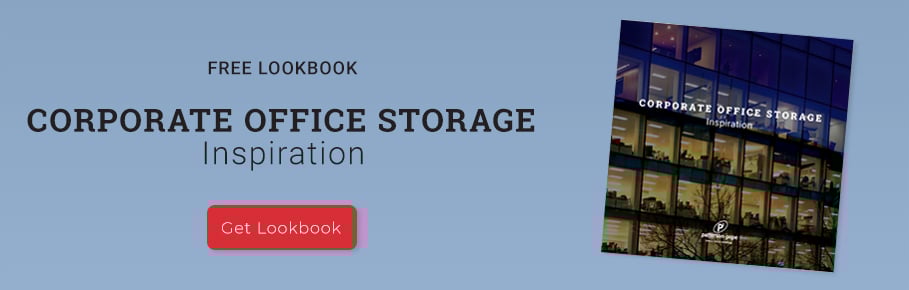
"Expectations around storage — and even what's being stored — have shifted dramatically," said Ben Gold, President of Patterson Pope. "The focus on storing paper and physical records is disappearing fast. That used to be the backbone of what we did, but digital disruption has changed everything, and it's happening at lightning speed."
Hybrid Work Requires Smarter Storage Solutions
Hybrid work changed how employees interact with office space. Many employees no longer maintain a permanent desk, but they still need secure, convenient storage when they're on site.
To meet that need, organizations increasingly rely on shared workspaces and touchdown areas. These spaces support short-term use and allow employees to move in and out of the office without friction. To sustain that flexibility, storage must be convenient, intuitive, and easy to manage.
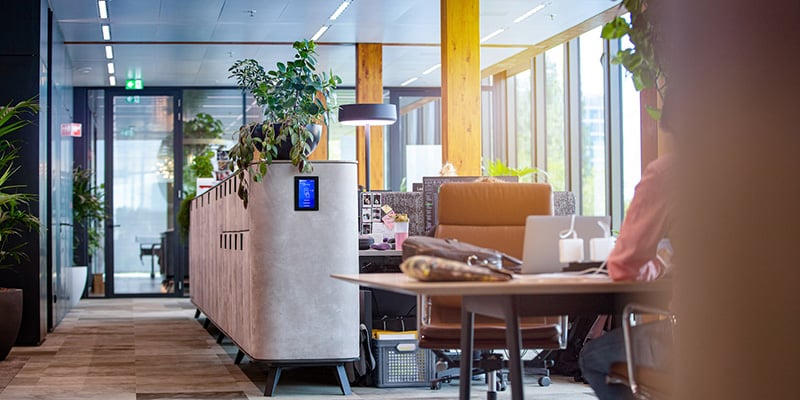
Day-use lockers and shared storage zones give employees a place to store personal items, laptops, and work materials without assigning permanent space. They also reduce clutter and help maintain a clean, organized workspace that supports collaboration.
In hybrid offices, convenience determines whether storage succeeds or fails.
Technology Simplifies Workplace Storage
Technology continues to influence workplace storage trends, especially as organizations look for ways to streamline everyday tasks. Enter: smart lockers.

Instead of managing keys or combinations, employees access smart lockers with badges or mobile apps. This approach removes common user frustrations and reduces the administration burden on facilities teams. Employees can easily secure their belongings, and organizations no longer need to manage lost keys or reset locks.
And since smart lockers easily integrate with existing systems, they reduce friction instead of adding steps. Fewer moving parts often translate into fewer problems.
Modular Systems Define Modern Office Storage
Flexibility drives many workplace storage systems today, and modular systems deliver it. Offices change layouts more frequently than ever, and storage must keep up.
Modular casework allows organizations to reconfigure spaces without starting over. Teams can adapt storage layouts as space usage, headcount, and workflows change. This adaptability makes modular systems especially valuable in large corporate environments and headquarters offices.
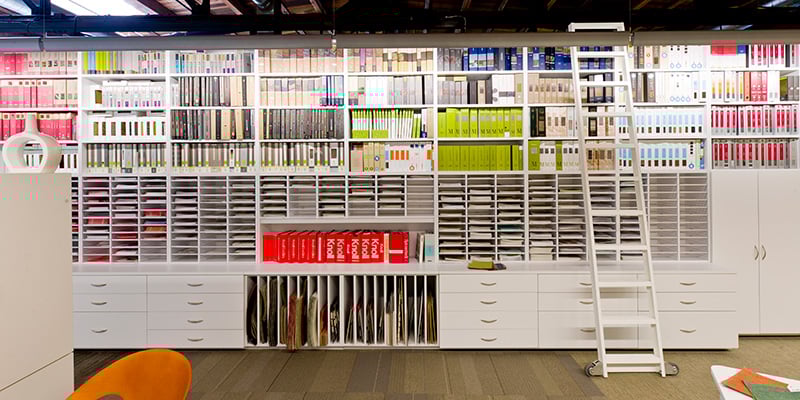
Lead times also matter. Traditional millwork can slow projects down, while modular systems offer faster delivery and installation. That speed can be the difference between a space that adapts quickly and one that stalls during transition.
Modern Office Storage Supports People, Not Just Paper
As offices open up visually, storage has moved closer to where work happens. Organizations no longer hide storage in back rooms. Instead, they integrate it intentionally into the workspace.
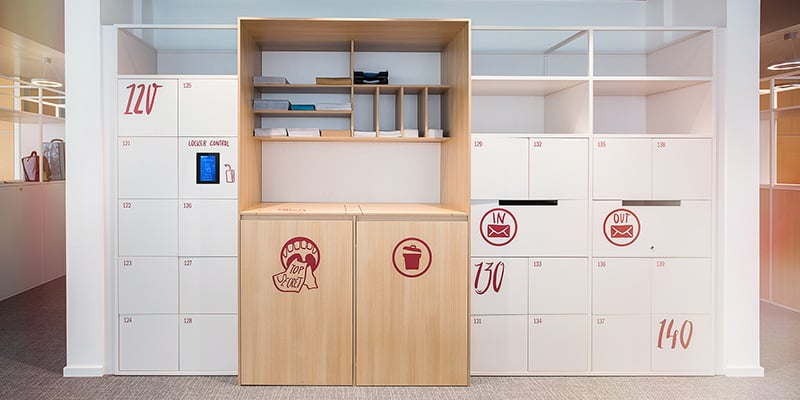
Modern storage trends take many forms:
- Personal storage for hybrid employees
- Modular casework for mailrooms and package handling
- Lockers and shared storage supporting collaborative spaces
The goal is not to eliminate storage, but to make it work quietly in the background while supporting daily activity. Today's corporate storage solutions look modern and function smoothly, without feeling cluttered or overdesigned.
What Modern Workplace Storage Looks Like in Practice
Real-world workplace projects show how modern storage supports flexibility, mobility, and day-to-day convenience. At Peaksware's Colorado headquarters, the company designed a new, highly collaborative office environment with open desks and shared spaces, intentionally moving away from assigned seating and traditional personal storage.
To support that shift, Peaksware implemented smart locker systems that gave employees secure, on-demand storage without tying lockers to specific individuals. Team members could access lockers using their existing key fobs or mobile devices, eliminating keys, combinations, and the administrative overhead that comes with managing them. The system supported both short-term and recurring use, aligning with hybrid schedules where employees are in the office a few days a week, rather than every day.

This approach allowed storage to flex with how people actually used the space. Employees could leave personal items, laptops, or bags on-site when needed, without cluttering shared work areas or carrying everything with them throughout the day. For facilities and IT teams, the lockers integrated smoothly into existing building systems, keeping management simple and low-friction.
Projects like this reflect a broader workplace storage trend. As offices become more collaborative and less desk-centric, storage must be intuitive, flexible, and easy to use, supporting how employees move through the space instead of anchoring them to it.
Workplace Storage Will Keep Evolving
One thing is clear: as work continues to evolve, storage solutions must evolve alongside it. Organizations that succeed are the ones that plan for change. They choose systems that adapt, reconfigure, and scale without disrupting daily operations. Flexibility, convenience, and organization remain the defining principles.

"Change is constant," says Patterson Pope CEO Ben Gold. "And that's one of the most exciting aspects of what we do. That constant forward motion pushes us to find new ways to help our clients arrive at the right solutions — whether that's through innovative products, creative designs, or even in how we talk with others. Standing still simply isn't an option, and that's what keeps our work fresh, exciting, and fulfilling."
Planning for What Comes Next
Workplace storage today focuses less on holding stuff and more on supporting people. Modern office storage solutions reflect changing work habits, hybrid schedules, and a demand for flexibility without complexity.
Patterson Pope helps organizations apply these insights to real-world environments, helping teams plan storage solutions that align with how their workplaces actually function. If you're rethinking your office space or evaluating corporate storage solutions, contact a storage specialist today to translate these trends into practical solutions that work today and adapt tomorrow.