
Setting up a library makerspace storage system starts with a simple reality: creative spaces only work when people have room to create.
Libraries use makerspaces, innovation labs, media studios, tech labs, and workshop areas to support hands-on learning. But those spaces can quickly become crowded when tools, supplies, equipment, and unfinished projects don’t have a clear home.
Good storage planning helps keep the space usable. It supports staff supervision, patron access, program setup, restocking, checkout, and flexibility as the room changes over time.
The goal is to create a storage plan that keeps materials organized, work areas clear, and the space ready for whatever patrons are learning, building, testing, recording, or trying next.

Start with the zones your makerspace needs
Before choosing shelving, cabinets, lockers, or casework, start by looking at the different kinds of storage the makerspace has to support.
Most library makerspaces need a mix of storage zones:
- Tool and supply storage: Everyday materials, kits, bins, hand tools, and small parts that need to be easy to find, use, and restock.
- Equipment support storage: Space for accessories, cords, components, manuals, filament, media gear, or other items that support larger tools and technology.
- Project storage: A place for in-progress work that needs to pause between sessions without taking over worktables or disappearing into the wrong bin.
- Staff-controlled or secure storage: Storage for electronics, higher-value equipment, or any other materials that might require supervision.
- Flexible workshop or teaching storage: Mobile or adaptable storage for supplies that move between programs, classrooms, activity zones, or pop-up instruction areas.
Thinking in zones helps the layout support the full range of activity happening in the room instead of treating every tool, kit, project, and supply bin the same way.
Plan storage around access, supervision, and movement
In a library makerspace, not every item should be stored the same way. Some materials should be visible and easy for patrons to use. Some should stay under staff control. Others belong in a centralized supply area where they can be restocked without crowding the active workspace.
Start by asking how each item is used:
- Is it something patrons should be able to browse and grab?
- Does it require staff instruction or supervision?
- Will it travel to a classroom, workshop table, or event space?
- Does it need to be checked out, reserved, or stored between sessions?
Those answers help determine whether storage should be open, secured, mobile, centralized, or checkout-managed. They also help prevent the common makerspace problem: everything technically has a place, but none of those places match the way the room works.
Making storage decisions for library makerspaces
Once you know how the space needs to work, the storage choices start to narrow. After all, a cart of workshop materials does not need to live in the same kind of storage as a bin of 3D printer filament or a locked electronics cabinet.
The next step is matching storage to the way people use the makerspace, so materials stay organized without crowding out the making.
For visible, everyday supplies
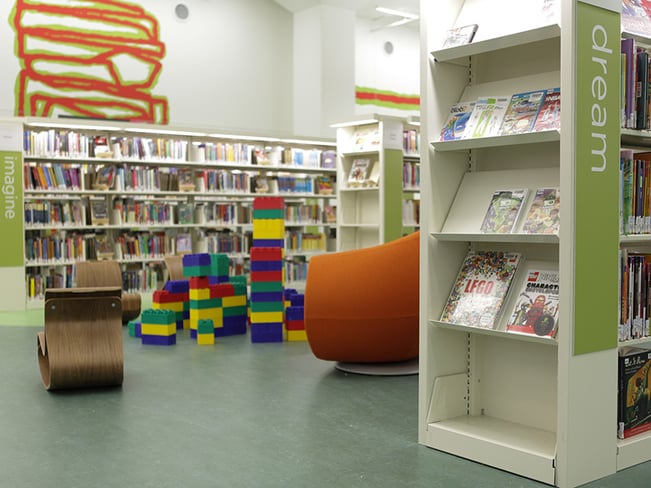
Static shelving is often the strongest starting point for library makerspace storage and one of the best shelving options for library innovation labs. It works well for bins, kits, hand tools, craft supplies, small parts, and other everyday materials that need to stay easy to see, grab, and restock.
In a makerspace or innovation lab, visibility matters. When patrons and staff can quickly find what they need, the room works better, and fewer supplies end up buried in drawers, scattered across tables, or hidden in the wrong closet.
For staff-managed or enclosed storage
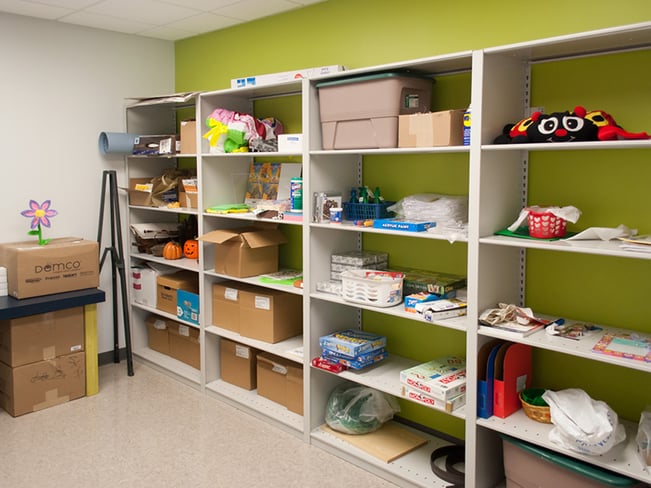
Cabinets can help protect tools, electronics, supervised materials, and higher-value equipment that should not sit in open access. They also create a clearer separation between patron-facing supplies and staff-managed storage.
That separation matters in spaces where age groups, programs, and supervision levels change throughout the day. Some materials may be fine during a staff-led workshop, but need to be secured when the room is open for general use.
For project holdover, personal items, and checkout
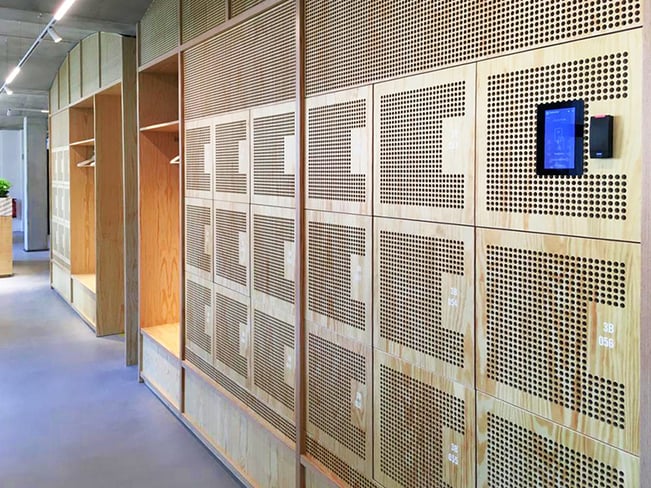
Lockers can support short-term project storage, personal belongings, reserved materials, or checkout workflows. They give patrons and staff a defined place for items that need to be stored between sessions without taking over worktables or disappearing into general storage.
Smart lockers can be useful when libraries lend devices, kits, tools, or other materials and need a more structured pickup or return process. They are not the default answer for every makerspace, but they can add convenience and accountability where checkout-managed storage is part of the workflow.
For workstations and activity areas
Modular casework can connect storage directly to the work. Counters, drawers, cabinets, and shelving can support dedicated activity zones for making, building, recording, repairing, teaching, or experimenting.
Unlike fixed built-ins, modular casework can be adjusted as programs and room layouts change. That makes it useful for makerspaces where today’s 3D printing area may need to become tomorrow’s media station, robotics zone, or workshop table.
For backstock and support storage
High-density mobile storage can help libraries keep more materials nearby without letting storage take over active maker space. It’s best suited for backstock, supply rooms, adjacent storage areas, or support spaces where materials need to stay accessible without sitting in the middle of the room.
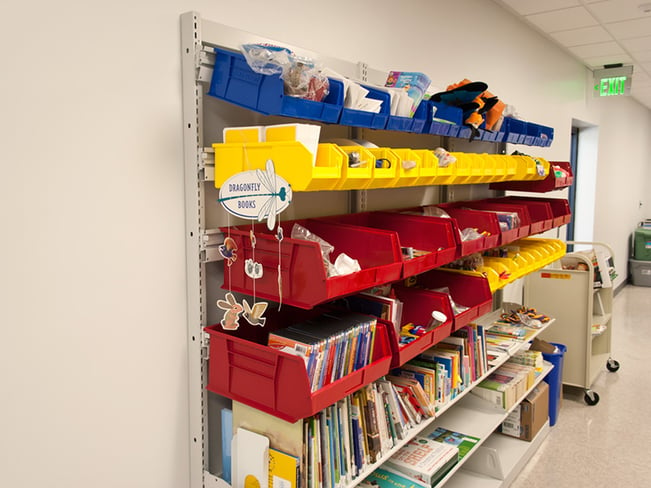
Bin shelving systems can also help manage small parts, consumables, craft supplies, and program materials that need to stay sorted by type, activity, or frequency of use. For makerspaces with lots of little pieces, the humble bin can do a lot of heavy lifting.
Used carefully, support storage can preserve the floor space patrons came to use: the tables, tools, workstations, and open areas where ideas turn into projects.
Storage that keeps the making moving
A library makerspace works best when the room is ready for what patrons want to do next. Supplies are easy to find. Tools are stored where staff can manage them. Projects have a place to pause.
The same plan should also leave room for change. Programs shift, technology evolves, and patron needs change from day to day. With the right mix of open, secured, mobile, and compact storage, libraries can keep the space organized and adaptable enough to keep creative momentum moving.
If you’re planning or rethinking a library makerspace storage plan, Patterson Pope can help you create a setup that supports the programs you run today and the ideas your patrons bring tomorrow.