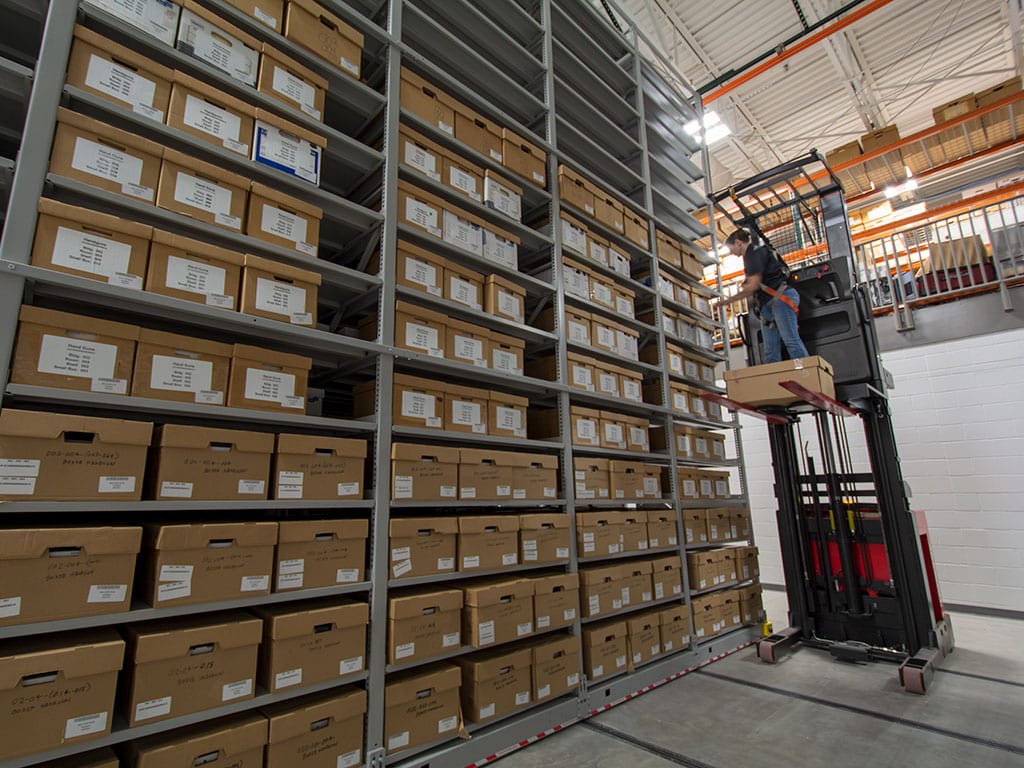
Property rooms weren’t originally built for racks of charging devices, terabytes of bodycam footage, and decades-long digital retention requirements. They were built for boxes. Paper files. Gun cases. Physical inventory.
Digital evidence hasn’t replaced physical evidence. It’s added to it. And that shift is forcing agencies to rethink how property rooms are designed, secured, and managed. The challenge is still the same: preserve control, visibility, and credibility at every step of evidence handling.
But reshaping property rooms for digital evidence means more than just adding outlets. It’s about rethinking workflow, custody control, and long-term capacity.
What is a Hybrid Evidence Room?
A hybrid evidence room is a secure property room designed to manage both physical evidence and digital workflows in a coordinated environment.
It accounts for:
- Boxed and bulk physical evidence
- Pass-through intake lockers
- Secure storage and charging of devices
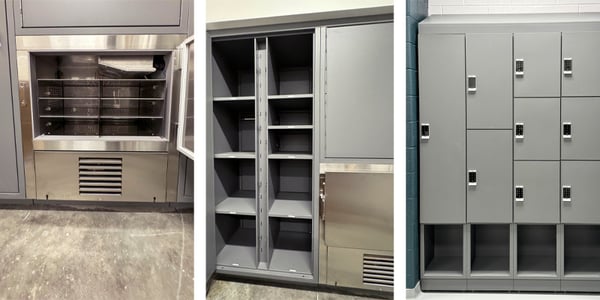
- Refrigerated compartments for biological materials
- Access-controlled zones for technicians
- Audit-ready tracking of locker access
A hybrid design doesn’t necessarily mean complexity. It means intentional layout. When intake, charging, retrieval, and shelving are planned together, agencies reduce congestion, limit informal transfers, and strengthen defensibility.
How Is Digital Evidence Changing Property Room Design?
Digital evidence is changing property room design by requiring secure intake zones, powered storage for devices, access-controlled lockers, and infrastructure that supports both physical custody and digital processing.
Today’s evidence rooms are operational environments where officers deposit items, technicians retrieve them, devices are powered and documented, and custody is tracked in real time.
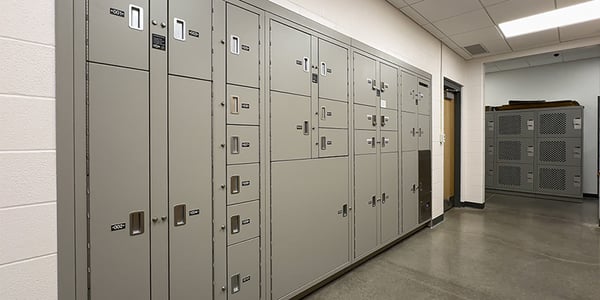
Take the Downers Grove Police Department. In its CALEA-accredited facility, pass-through evidence lockers allow officers to deposit evidence from one side while technicians retrieve it securely from the other. That reduces unnecessary handling and limits access to only the presenting officer and assigned technician.
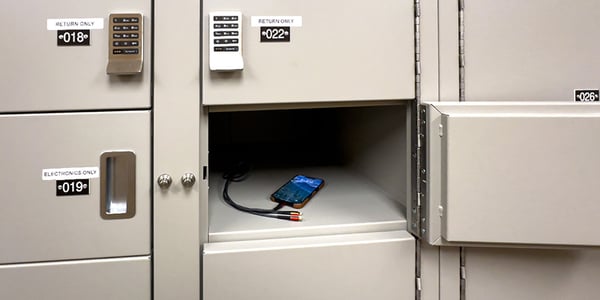
Several locker compartments are equipped with USB ports to maintain electronic devices during intake and processing, and others are refrigerated to preserve sensitive materials. Instead of devices sitting on desks while awaiting upload, intake happens in a controlled, powered, documented environment.
That’s a hybrid workflow built into the room itself—where storage does more than just hold evidence, it supports how evidence moves.

Why Does Digital Evidence Still Require Physical Storage?
Digital evidence enters the system as a physical object.
Phones, tablets, cameras, SD cards, and hard drives must be secured immediately upon collection—often long before files are extracted or uploaded into an evidence management system. That intake window is one of the most vulnerable points in the chain of custody.
Without controlled storage, devices may sit unsecured in processing areas, move informally between staff, or remain powered in non-secure spaces while waiting for review.
Secure intake lockers can help close that gap by:
- Protecting devices immediately after submission
- Restricting access while evidence awaits processing
- Supporting powered storage without breaking custody
- Reducing unnecessary handoffs between personnel
What Chain-of-Custody Risks Do Hybrid Evidence Rooms Face?
Hybrid evidence rooms introduce additional chain-of-custody considerations because agencies must track both physical access and digital activity—including uploads, downloads, transfers, and system access. In other words, documentation extends beyond “who opened the box.”
Hybrid evidence room documentation includes:
- Who accessed a locker
- When a device was deposited or retrieved
- Who powered or processed it
- When files were uploaded
- When the media was transferred or reviewed
Each event must be time-stamped, auditable, and defensible.
CALEA accreditation standards require documented chain of custody and controlled access throughout evidence handling. Simply having a policy isn’t sufficient. Agencies must demonstrate accountability in practice.
Access-controlled lockers that log user credentials, combined with digital evidence management systems that record file activity, create continuity from intake to courtroom.
When physical and digital records align, custody becomes easier to defend.
Storage That Scales with Long-Term Retention
Overflowing property rooms are a liability. Extended statutes of limitations, new evidence types, and increasing digital intake demand storage systems that can evolve over time. And digital storage doesn’t reduce storage needs. In many cases, it actually increases them.
The Volusia County Sheriff’s Office experienced the limits of outdated infrastructure firsthand. Its former evidence storage space—housed in a 1938 jail—had narrow doorways, low ceilings, and flood risk. Storage was improvised, and scalability was limited.
When a new facility was funded, storage planning began with a survey of the total cubic footage of evidence on hand. The result was the installation of custom 40-foot-long by 20-foot-high high-bay mobile storage units designed to preserve long-term capacity. No area was left overfilled, and space was intentionally reserved for growth.
That approach recognizes a critical reality: Planning for retention is often as important as planning for intake. That’s especially true in hybrid evidence environments.
Preparing Property Rooms for What’s Next
Digital evidence volumes will continue to rise, retention timelines will continue to expand, and accountability expectations will only increase. Agencies that treat storage as operational infrastructure—not just shelving—are better positioned to manage volume, protect custody, and defend their processes in court.
If your department is planning a renovation or new facility, storage design deserves early consideration. When digital workflows and physical storage are planned together, agencies gain more than square footage. They gain control.