
Biological evidence storage refers to the controlled handling, environmental management, and documentation of materials containing DNA or other biological material to preserve forensic integrity.
Evidence managers don’t get second chances. Most of the time, that responsibility rests on one person—and once evidence is compromised, it’s compromised. That’s why biological evidence must be stored in a way that protects DNA integrity, prevents contamination, and maintains a documented chain of custody.
That starts with the fundamentals:
- Thoroughly drying wet biological samples
- Using breathable packaging to prevent moisture buildup
- Storing items under conditions that match the evidence type (room temperature, refrigerated, or frozen)
- Documenting every transfer of custody
As evidence storage trends shift toward long-term DNA preservation and expanded retention laws, agencies are rethinking not just how biological materials are stored, but whether their facilities are equipped to support those requirements long-term.
What Are the Requirements for Storing Biological Evidence Safely?
Storing biological evidence safely comes down to three things: the right environment, the right documentation, and the right retention strategy.
According to NIST and NIJ guidance, storage conditions must match both the type of evidence and how long it’s expected to be retained. In practice, that typically means one of four environments:
- Frozen (typically at or below -10ºC)
- Refrigerated (approximately 2ºC-8ºC with controlled humidity)
- Temperature-controlled (moderate, stable conditions with humidity limits)
-
Room temperature (ambient conditions when appropriate for thoroughly dried materials)
Humidity matters just as much as temperature. Excess moisture can accelerate degradation and compromise DNA integrity.
And in many evidence rooms, humidity control isn’t as simple as adjusting a dial. It requires properly designed refrigerated storage and environmental monitoring.
Retention requirements add another layer. Open investigations may require evidence to be held through the statute of limitations—or indefinitely in the case of homicide. Once charges are filed or a case is adjudicated, timelines may shift, but biological evidence often remains subject to long-term preservation mandates.
That’s where storage infrastructure becomes critical.
Temperature Requirements for Biological Evidence
Temperature requirements for biological evidence depend on the type of material and how long it must be preserved. One of the most significant evidence storage trends in recent years is the move away from freezing everything by default and toward more evidence-specific environmental controls.Based on long-term storage guidance from NIST and NIJ, here’s how common materials are typically handled:
- Liquid blood: Refrigerated in order to slow degradation
- DNA extracts (liquid): Frozen for long-term preservation
- Dried swabs with biological material: Typically frozen once samples are thoroughly dried
- Bones: Frozen to preserve long-term integrity
- Hair: Often acceptable in refrigerated conditions, depending on testing needs
Refrigerated environments are generally maintained between 2ºC and 8ºC with controlled humidity. Frozen environments are typically maintained at or below -10ºC.
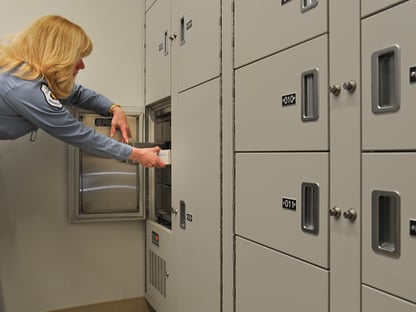
Here, the challenge is maintaining each range reliably over time, especially as volume increases. That’s why many agencies are integrating refrigerated evidence lockers for secure intake and temporary holding, alongside larger walk-in cold rooms designed with scalable shelving systems.
Matching the environment to the evidence is step one. Designing a system that can sustain that environment for decades is step two.

Chain of Custody and Retention Timelines
Every transfer must be recorded. Every storage location must be documented. Every access point accounted for.
Retention timelines depend on case status:
- Homicide offenses: Often require indefinite retention.
- Serious felonies: Frequently tied to statute-of-limitations or incarceration-based retention policies.
- Adjudicated cases: May still require biological evidence to be preserved for the length of incarceration—or longer, depending on state law.
Indefinite retention changes storage planning from short-term capacity management to long-term facility strategy.
For the Locust Grove PD, limited square footage and fragmented storage locations were creating chain-of-custody concerns. As part of a new public safety building, the agency implemented secure evidence lockers—including refrigerated units—alongside high-density mobile shelving in the main evidence room. The new setup improved custody control and environmental stability, all while creating room for long-term growth.
Maximizing Long-Term Storage Capacity
For many agencies, biological evidence storage doesn’t break down because of policy. It breaks down because of space.
Cold storage fills up, retention timelines expand, new DNA initiatives increase the volume of preserved material. And of course, you never realize you’re out of space until the last shelf is full.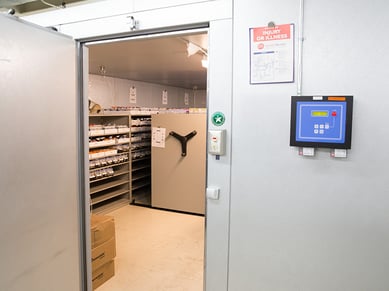
Common storage options include:
- Residential refrigerators/freezers for smaller evidence volumes
- Commercial refrigeration units for higher capacity needs
- Walk-in coolers or freezers for large-scale, long-term retention
Most agencies start small. But capacity isn’t just about the size of the unit. It’s about how the space inside it is used.
Cold Room Optimization
High-density mobile systems reduce unnecessary aisle space by allowing shelving units to move. This creates full accessibility with significantly greater storage density, inside the same footprint.
In cold environments, properly rated mobile systems and stainless components allow agencies to increase capacity without compromising environmental stability. After all, when retention requirements are measured in decades, optimizing the interior layout of a walk-in freezer can be just as important as selecting the freezer itself.
A smaller, well-optimized cold room can reduce energy costs, delay expansion projects, and extend facility life. When retention requirements stretch decades into the future, storage planning must account for growth, not just current volume.
Best Practices for Preserving Biological Evidence
Biological evidence storage best practices include:
- Thoroughly drying wet biological samples before packaging
- Using breathable materials to prevent moisture buildup
- Storing evidence in environments matched to the material type (room temperature, refrigerated, or frozen)
- Maintaining controlled humidity levels in cold storage environments
- Documenting every transfer through a clear chain of custody
- Planning storage capacity for long-term or indefinite retention
If your current evidence room is nearing capacity, if refrigerated intake is fragmented, or if retention policies are evolving, it may be time to evaluate whether your storage systems are aligned with long-term compliance.
Contact a Patterson Pope representative to assess your current setup and develop a biological evidence storage strategy designed for precision, security, and long-term retention.